Every lead gen operator running on a platform like Boberdoo will tell you it works.
And it does. Until you have a fixed roster of buyers, a volume that's predictable month over month, and a routing engine charging you for ping/post auctions, AI scoring, and affiliate tools you never touch. Until a buyer disputes a lead and the answer to "why did this go where it went" is sitting inside someone else's system, not yours.
That's the trap with platforms built for everyone. They feel safe because they're established. They function like rent on a house you don't need most of the rooms in.
Built for Everyone, Fit for No One
The surface story is familiar: established platforms exist because they're proven, and proven beats custom. The actual story is quieter. Proven for whom?
Boberdoo, Phonexa, LeadsPedia: these platforms are built to serve the widest possible range of lead gen operations. That's not a flaw. It's the tradeoff. A system built to fit everyone can never be shaped to fit one operation exactly, and that's the whole advantage a custom build has on day one.
One client we worked with ran a single vertical (life insurance leads) at a steady volume of roughly 15,000 to 20,000 leads a month, distributed across a fixed roster of buyers. No real-time auctions. No shifting buyer pool. Just leads, rules, and a roster that doesn't change week to week. They were paying around $2000 a month for a platform priced to handle complexity they didn't have. The ping/post infrastructure, the affiliate tools, the multi-account architecture, none of it was in use. A fraction of that now runs a system built specifically around how they operate. And that gap widens as volume grows. A volume-based platform charges more as your lead count goes up. Every month you scale, the fee follows. A system you own doesn't reprice when your business does.
A platform built for everyone is a platform tuned for no one in particular.
Running that kind of operation through a general-purpose router means the logic you actually care about (who gets this lead, why, and what happens when two buyers are tied) lives inside someone else's black box. You see the outcome. You don't see the reasoning. When a buyer disputes a delivery, you're stuck reconstructing logic you didn't write and can't fully see.
That's the real cost. Not the subscription line. The dependency.
The Real Question Isn't Which Platform. It's Whether You Still Need One.
Most of the content in this space compares platforms against each other: which one has better dedup, which one prices fairer, which one integrates with your CRM. That's a useful question for someone shopping. It's the wrong question for someone who has outgrown the category entirely.
The better question: at what point does your operation stop looking like "any lead gen company" and start looking like one specific operation with one specific set of rules, at which point a general-purpose tool is solving a more complicated problem than the one you actually have?
The Checklist: Are You There Yet?
Score yourself honestly against these five. You don't need a perfect match on all of them, but if you're nodding at most of these, it's worth asking the build question seriously instead of renewing another year of platform fees.
1. Volume. Is your monthly lead volume predictable enough that you could write down a target number for each buyer at the start of the month and expect to land close to it?
2. Buyer roster. Do you work with a fixed, known set of buyers, not a constantly rotating marketplace of bidders you're matching against in real time?
3. Routing complexity. Are your actual routing rules (who gets a lead, in what order, under what conditions) something you could explain out loud in under two minutes? Or does explaining your own routing logic require pulling up the platform's settings and reverse-engineering what you configured two years ago?
4. Vendor lock-in frustration. When something breaks or a buyer disputes a lead, do you find yourself waiting on someone else's support queue, paying someone else's consulting rate, to get an answer about logic that governs your own business?
5. Your volume is growing. If your lead volume is increasing month over month, a volume-based platform reprices against you as you grow. At 15,000 leads a month the fee is one number. At 25,000 it goes up. A system you own doesn't reprice the same way. Hosting costs may tick up slightly with volume, but nowhere near what a per-lead platform charges.
Match two or three of these, and a custom build stops being a luxury and starts being the more obvious option. Match all five, and the platform fee you're paying is mostly a fee for staying in a system that doesn't fit.
Three Years Ago, We Would Have Told You Not to Build This
Here's the part most "build vs buy" content skips: the checklist above isn't new. Operators have matched it for years. Fixed roster, steady volume, simple rules, frustration with vendor lock-in. None of that is a recent development.
What's recent is that building custom finally makes sense for them.
Three years ago, a single-tenant routing engine like the one we built meant a different kind of cost. Hiring the right people to build and maintain it, the time before the first lead ever routed correctly, the risk of the system depending on whoever built it and nobody else. For an operation running 15,000 to 20,000 leads a month, that cost usually outweighs the platform fee. The platform was frustrating, but it was still the cheaper option.
That math has shifted. AI-assisted development has changed the economics of building scoped, purpose-built software. A system like this, event logging, proportional pacing, geographic routing, full buyer management, would have taken months and a large team a few years ago. Today, a tightly scoped build like this takes weeks, not quarters. The same work that might have run $80,000 to $120,000 in 2022 is closer to $40,000 to $70,000 now.
The checklist hasn't changed. What changed is the cost of acting on it.
This matters because it means the advice in this article wouldn't have made sense for most operators three years ago. We're not pointing out something that was always true and somehow missed. We're pointing out something that's only recently become practical, and most lead gen operators haven't caught up to it yet.
What It Actually Took to Build It
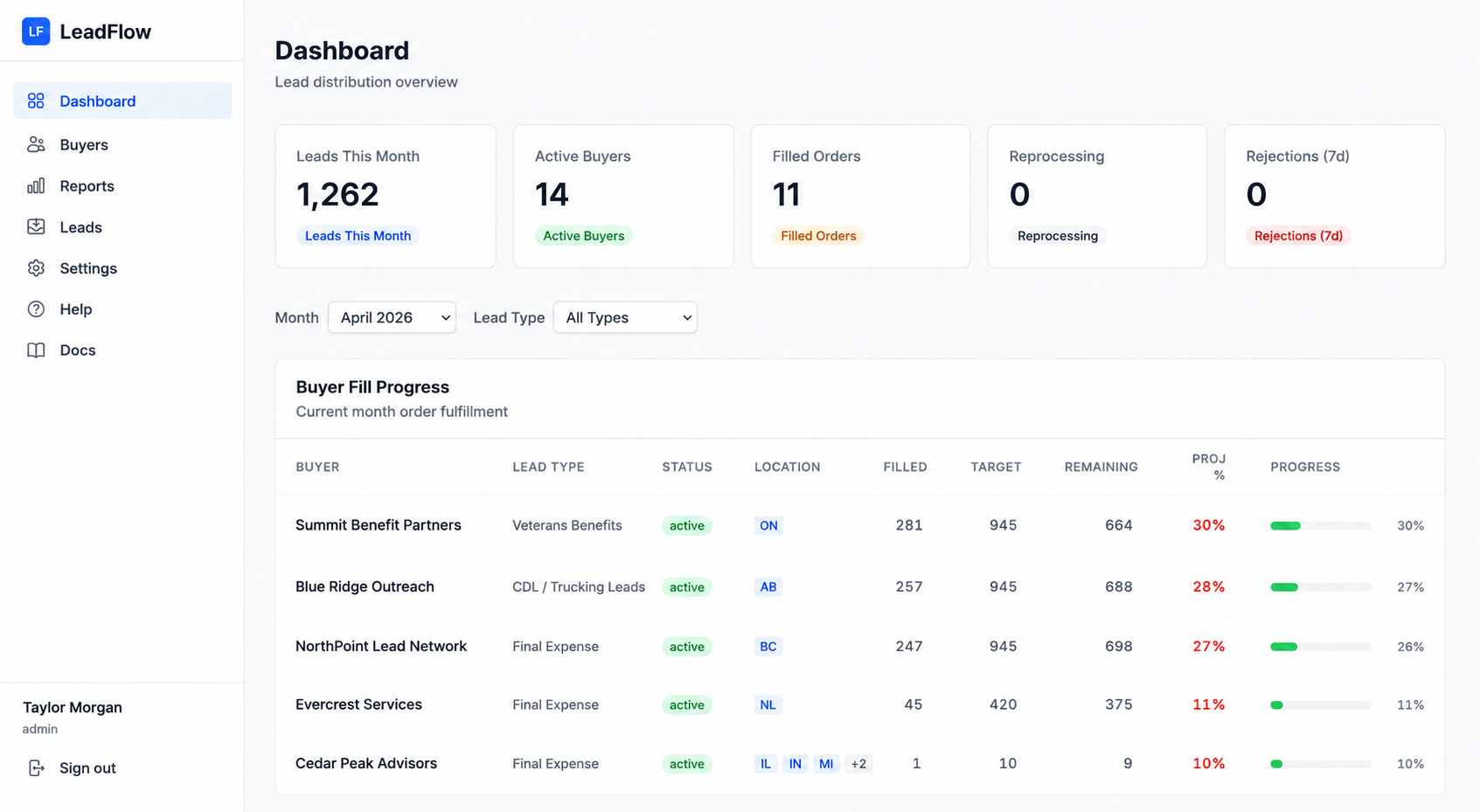
We didn't write a guide for replacing Boberdoo. We replaced it, for a real client, and that's a different thing to talk about.
The client came to us already running Boberdoo and already feeling the mismatch above. Fixed buyer roster, steady volume, simple rules. A platform priced and built for a much wider range of complexity than they needed.
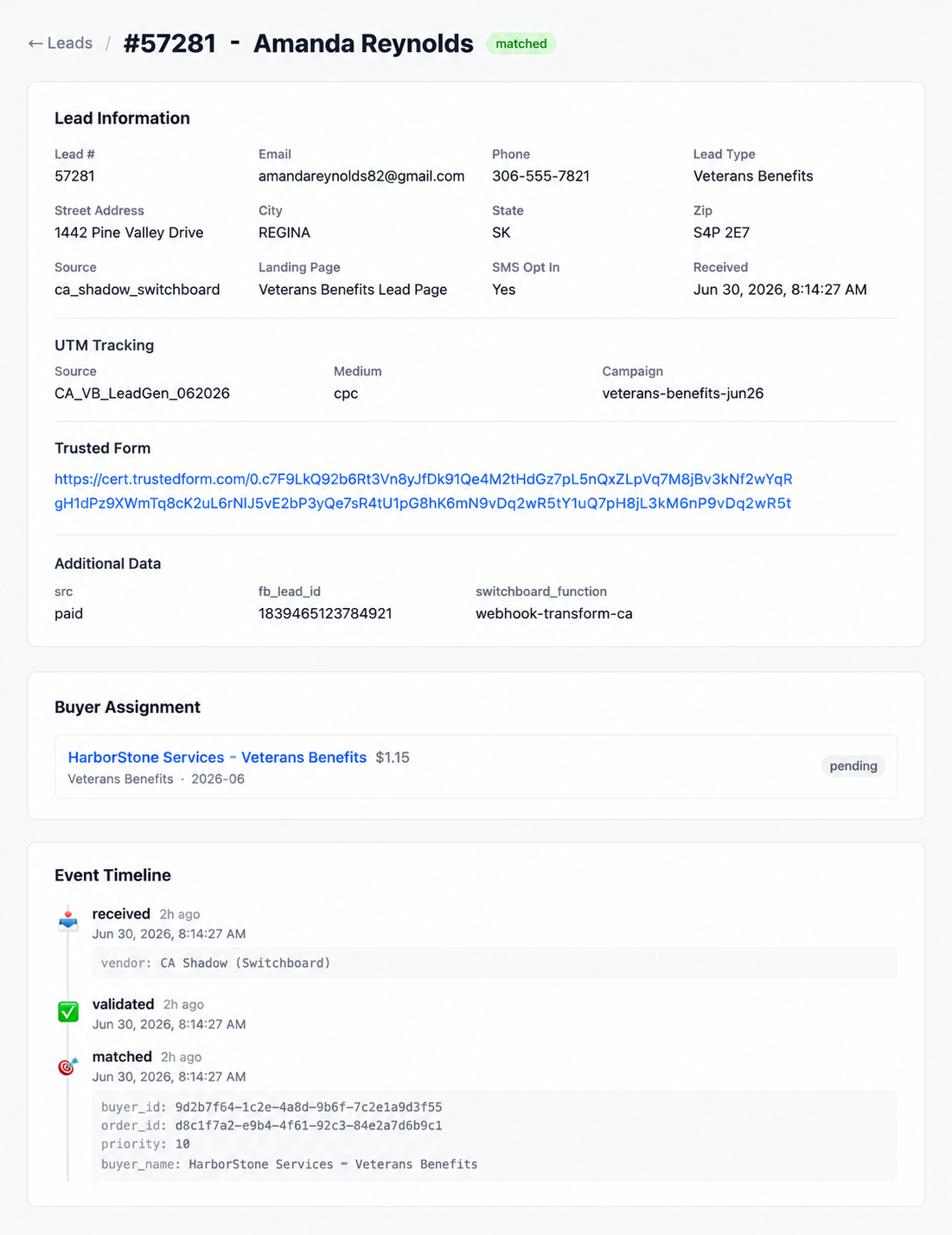
We built a single-tenant, rules-based routing engine, scoped specifically around how they actually operate. No ping/post bidding, because there's no live auction to run. No multi-account architecture, because there's one account that matters: theirs. What we did build: a full event trail on every lead (received, validated, matched, delivered, accepted or rejected) visible on a per-lead timeline. When a buyer disputes a delivery, the answer isn't a support ticket. It's a timestamped log.
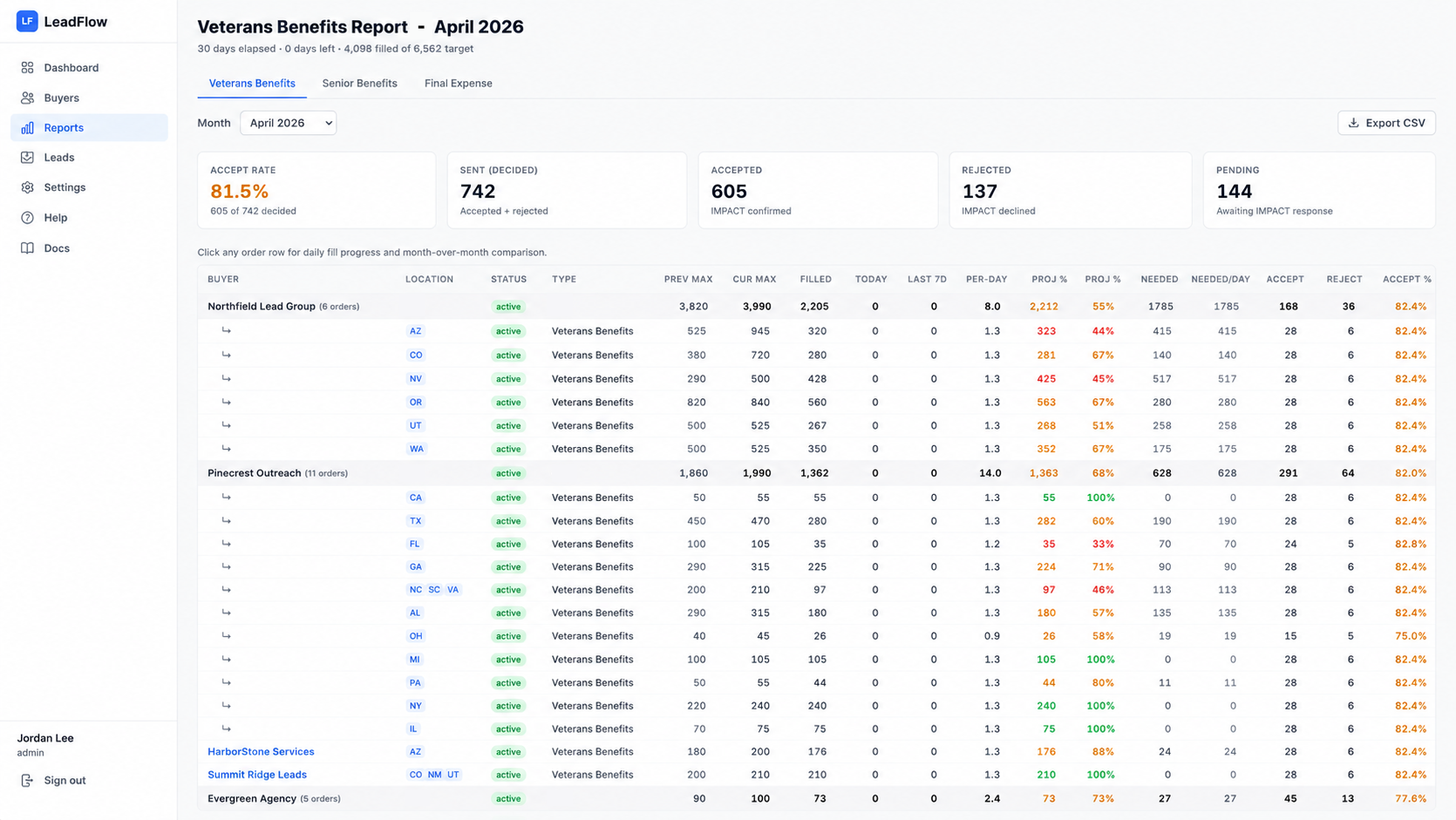
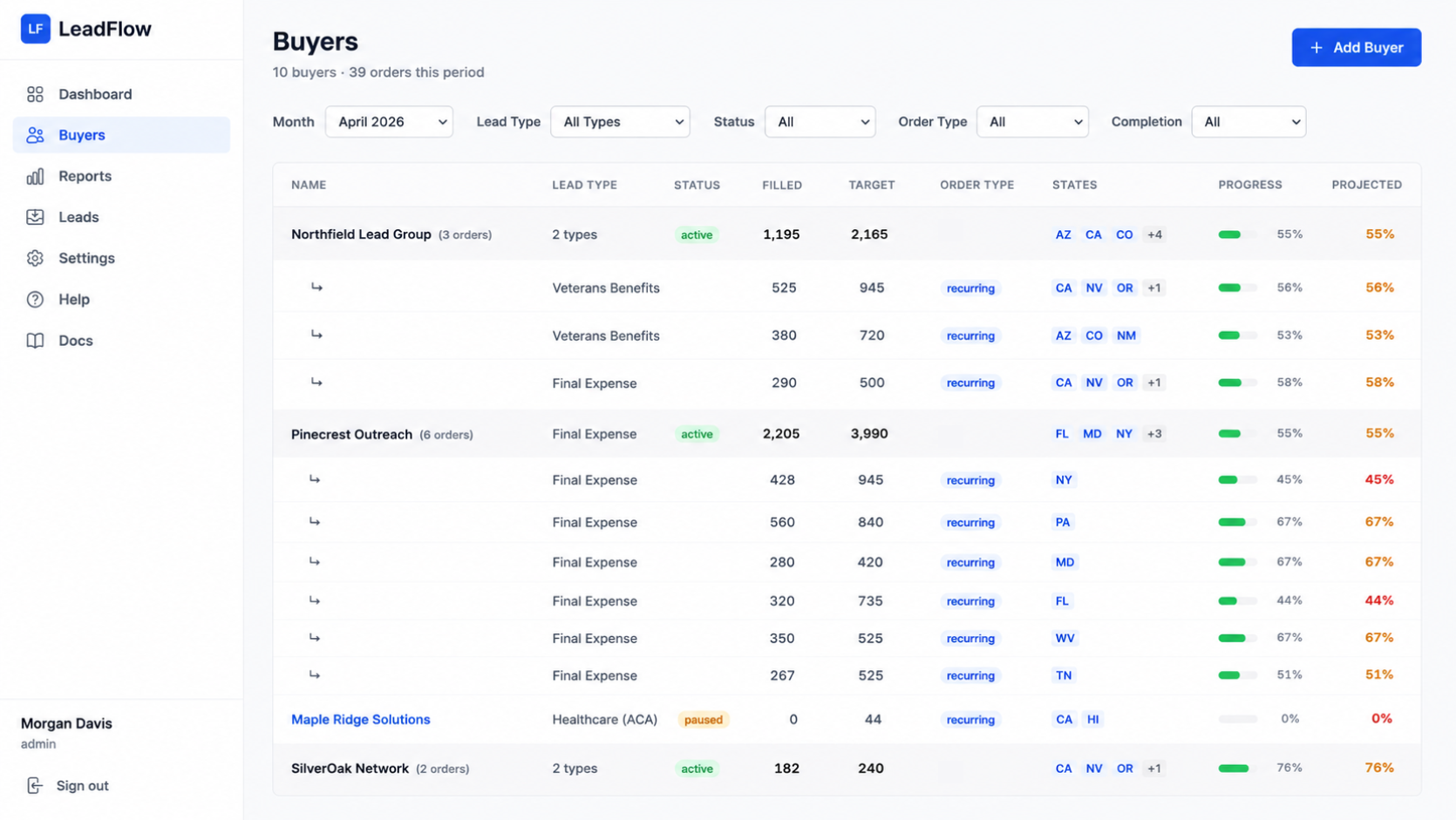
The fit shows up in places a configured platform can't reach. Owning the logic also means you find the edge cases instead of discovering them through a buyer complaint. Before a fix shipped in May 2026, the tiebreaker defaulted to database row order whenever two buyers landed at the same priority and fill count, which happens constantly at the start of every month, when every buyer's count resets to zero. The fix moved to proportional pacing: a lead routes to whichever buyer is furthest behind their monthly target, by percentage, so a buyer with a 525-lead order absorbs more volume than one with a 200-lead order, in proportion to what they're owed. That's the kind of bug you find when you own the code and are watching the numbers. In a black-box platform, you'd find out about it when a buyer started complaining that something felt off, with no way to point at exactly what.
The decision wasn't a default either. Most lead platforms run real-time auctions, pinging a lead to every buyer and letting the highest bidder take it. This client's buyers are fixed quota partners at agreed prices, not bidders, so the routing logic skips that entirely and goes straight to priority and pacing.
When you own the logic, you find the bug. When you rent it, you find out about it from a phone call.
This Is What Connectt Builds
Most lead gen operators are running someone else's compromise. A platform built to flex for a thousand different businesses can't be shaped to fit any one of them exactly. But that's not the whole story.
Platforms like Boberdoo exist because a lot of operators genuinely need what they offer. If you're still growing your buyer roster, testing new verticals, or running real-time auctions against a shifting pool of bidders, a general-purpose platform is the right call.
The breadth isn't waste when you're actually using it. The auction infrastructure, the affiliate tools, the multi-account architecture, those are features, not overhead, if your operation depends on them. The distinction is whether the tool is a commodity or the business. SaaS wins for the tools that don't differentiate you, email, scheduling, reporting. It starts working against you when the process IS the operation. For a lead gen operator, how leads are routed and to whom is the whole thing. Renting someone else's version of that logic is renting someone else's version of your business.
The gap shows up when your operation stops looking like most operations. Fixed roster. Predictable volume. Rules you could write on a napkin. At that point, a platform priced for complexity you don't have stops being a foundation and starts being friction.
That's who we build for. Not the operator still figuring out their buyer mix. The one who already knows it, runs it the same way every month, and is tired of paying for a system that doesn't know them back.
If you matched most of the checklist above, it's worth one conversation.